

Free · open source · GPL-3.0 · Windows test build
Measure how accurately your rifle shoots, and how little a small group can tell you.
GroupLab reads a photograph or a scan of a target you have shot, finds every hole, and gives you the group's statistics. Every figure comes with the range it could really be, and the software says plainly when the evidence does not support a conclusion.
Unsigned and rebuilt after every change that passes its tests. It may be broken. Other downloads and what to expect

The problem
Five shots measured three quarters. What does the rifle actually shoot?
A shooter fires five rounds, measures the two widest holes, changes one thing, fires five more and concludes the change worked. It almost certainly did not. Two loads that differ by 20 percent on five-shot groups cannot be told apart.
GroupLab measures far more carefully, and then tells you what the number is worth.
From five shots, the true dispersion lies between
0.68 and 1.92 ×
what was measured, a factor of 2.8
- < 5
- Refuses to quote a group size at all, and says why.
- 5 to 20
- Prints each figure with its interval's real coverage, not a comfortable 95 percent.
- compare
- Tells you when two loads cannot be separated, and how many rounds it would take to know.
How it works
One shot per bull, twenty-five bulls, one honest group.
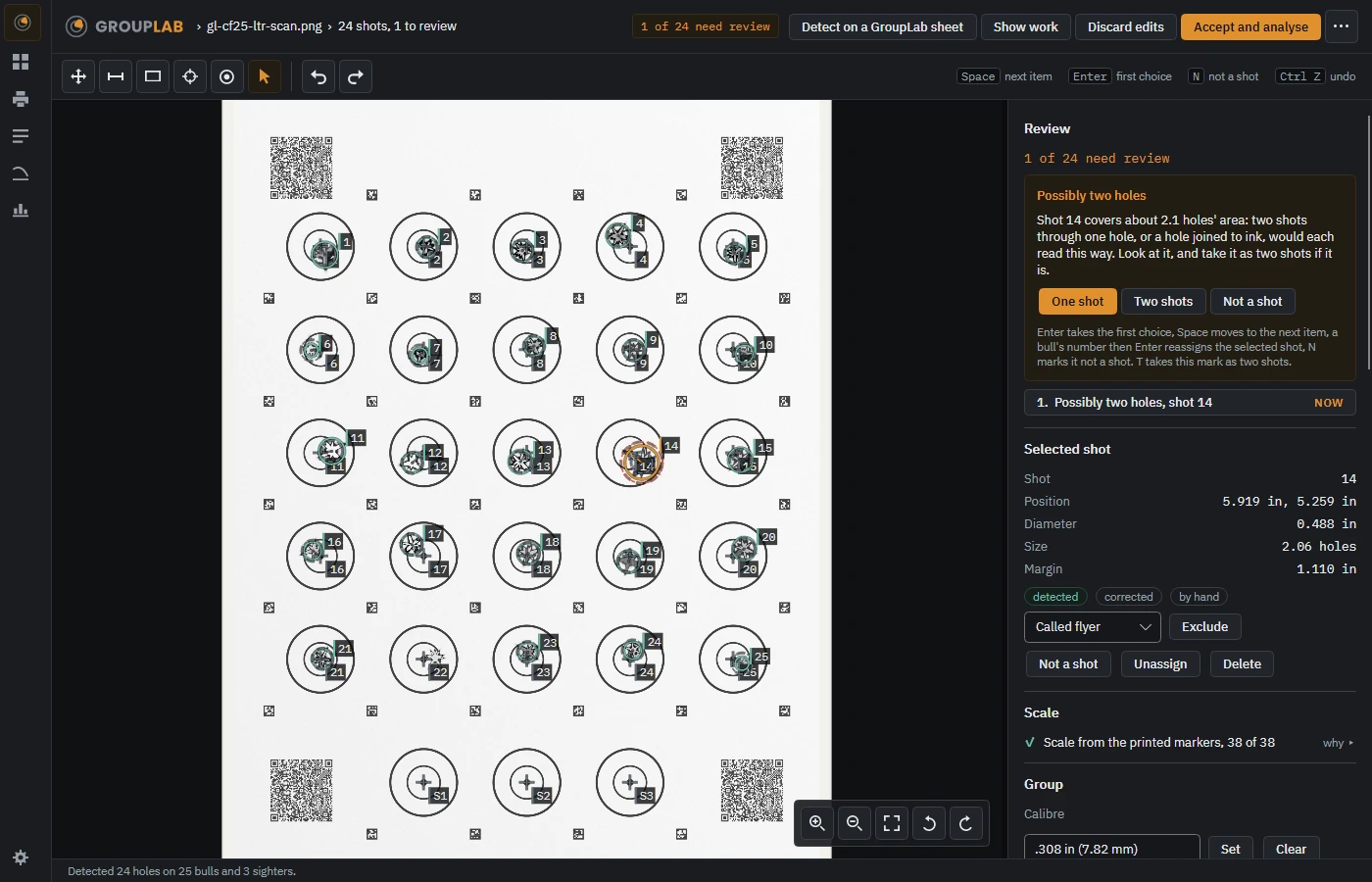
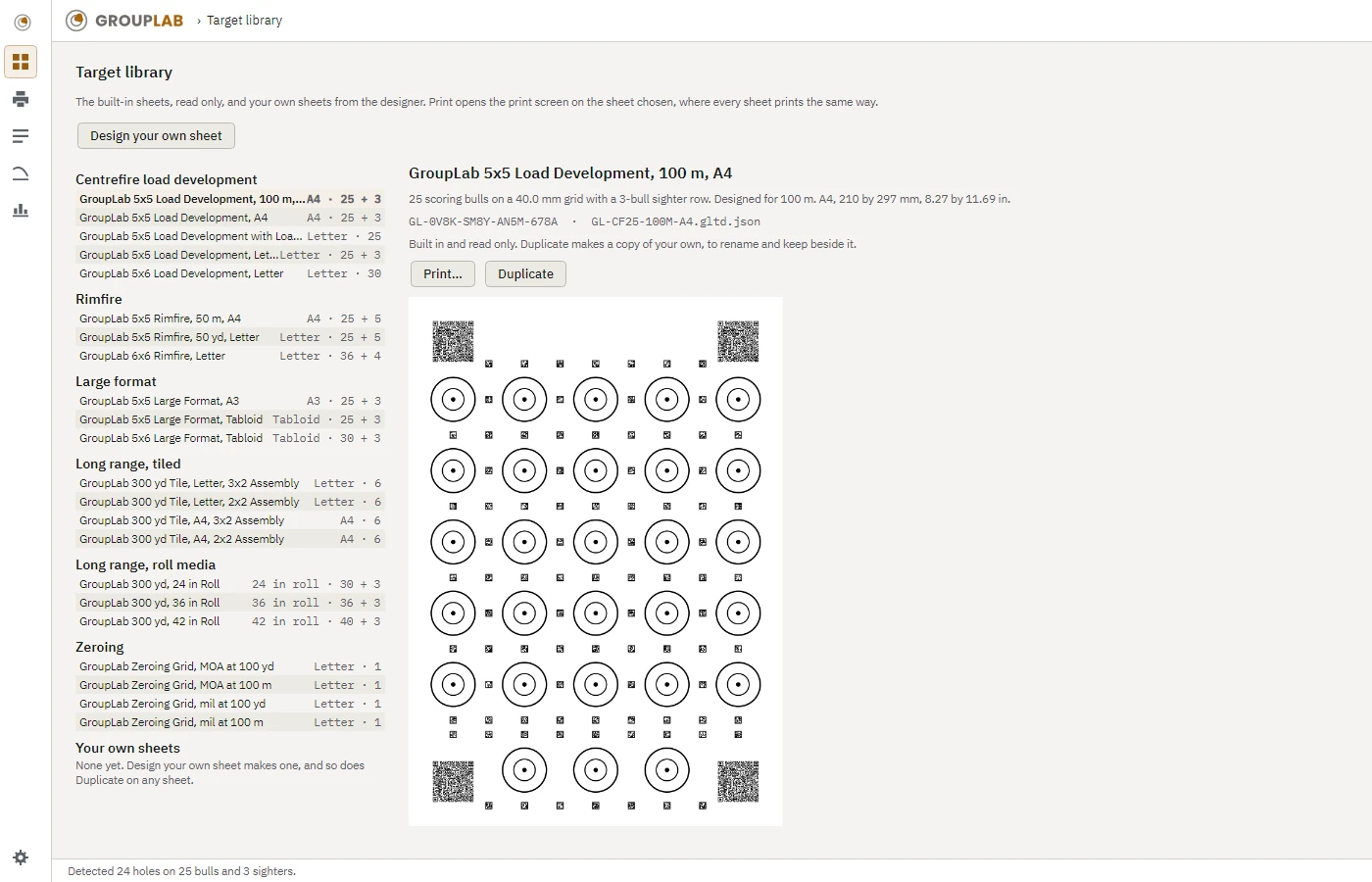
Each hole is measured against its own aiming point, so holes never overlap, and the offsets are pooled into one group far larger than you could shoot into a single bullseye.
- 01
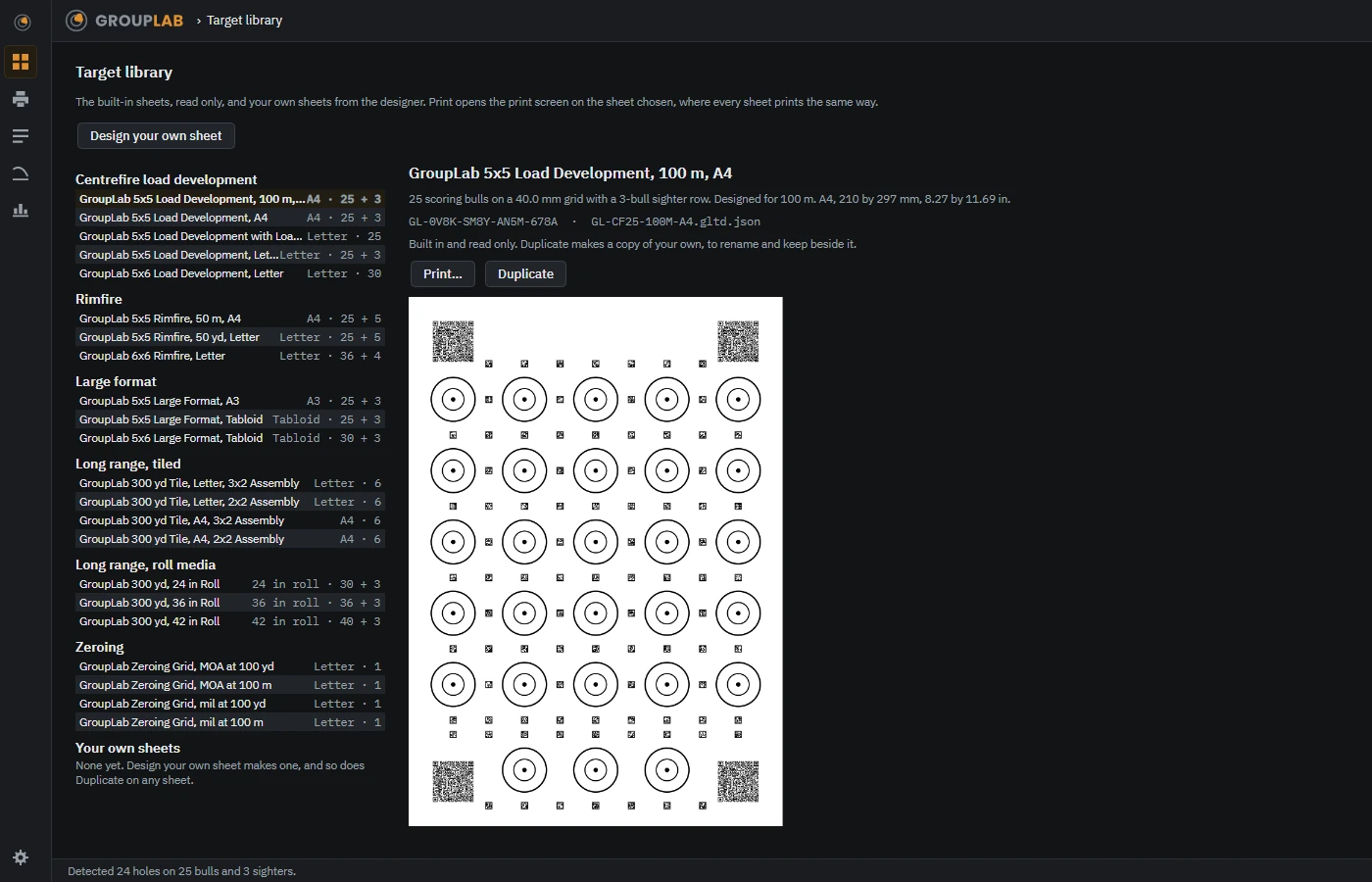
Print a GroupLab sheet
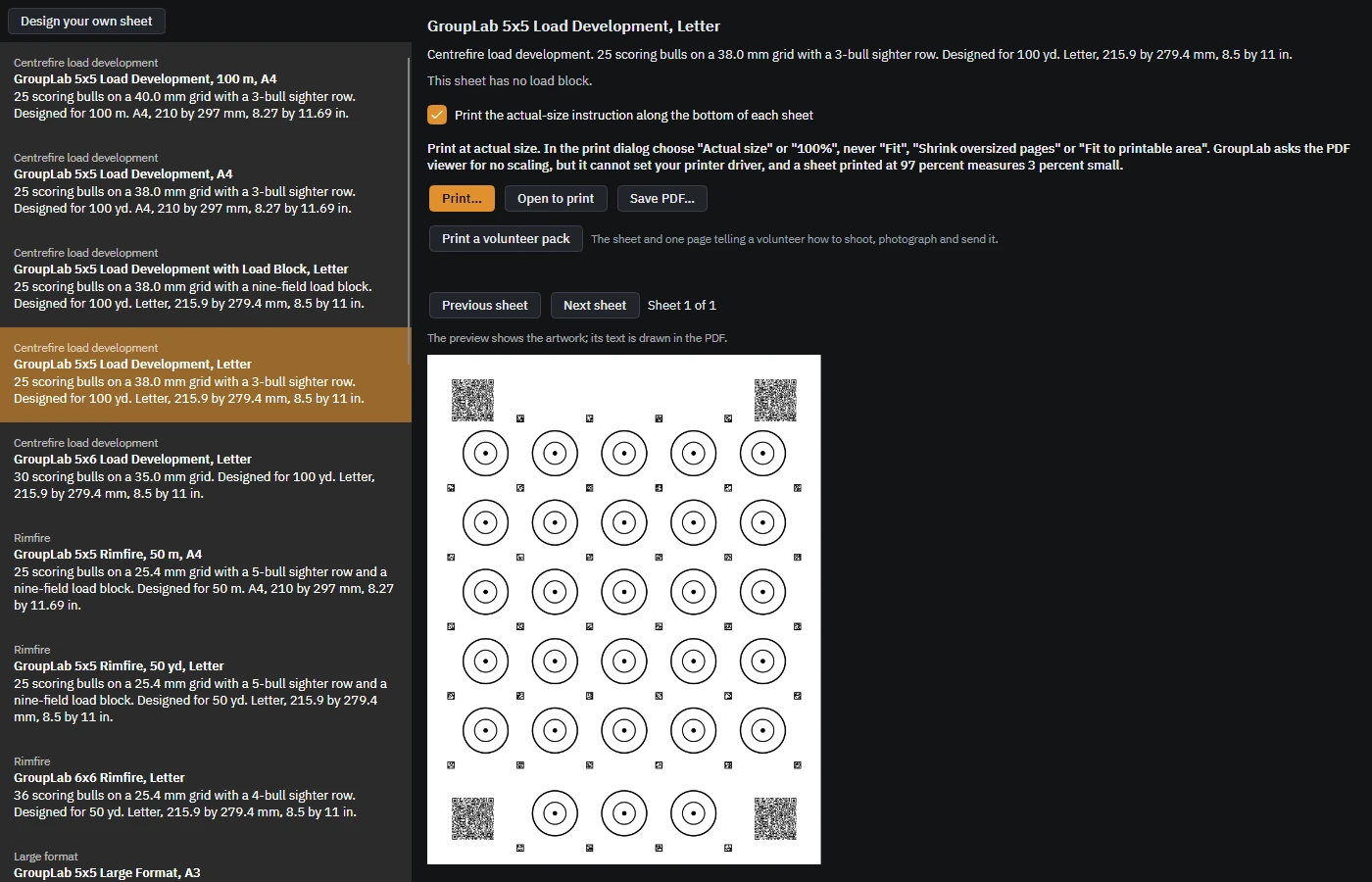
Twenty-two built-in sheets, printed at actual size. Registration markers and QR codes carry the sheet's full definition.
- 02
Shoot it
One shot per bull, in order. Write your load in the block at the bottom, or print it filled in.
- 03
Scan or photograph it
A flat 600 dpi scan is best. A photograph works too, even with the sheet still stapled to the board.
- 04
Read the analysis
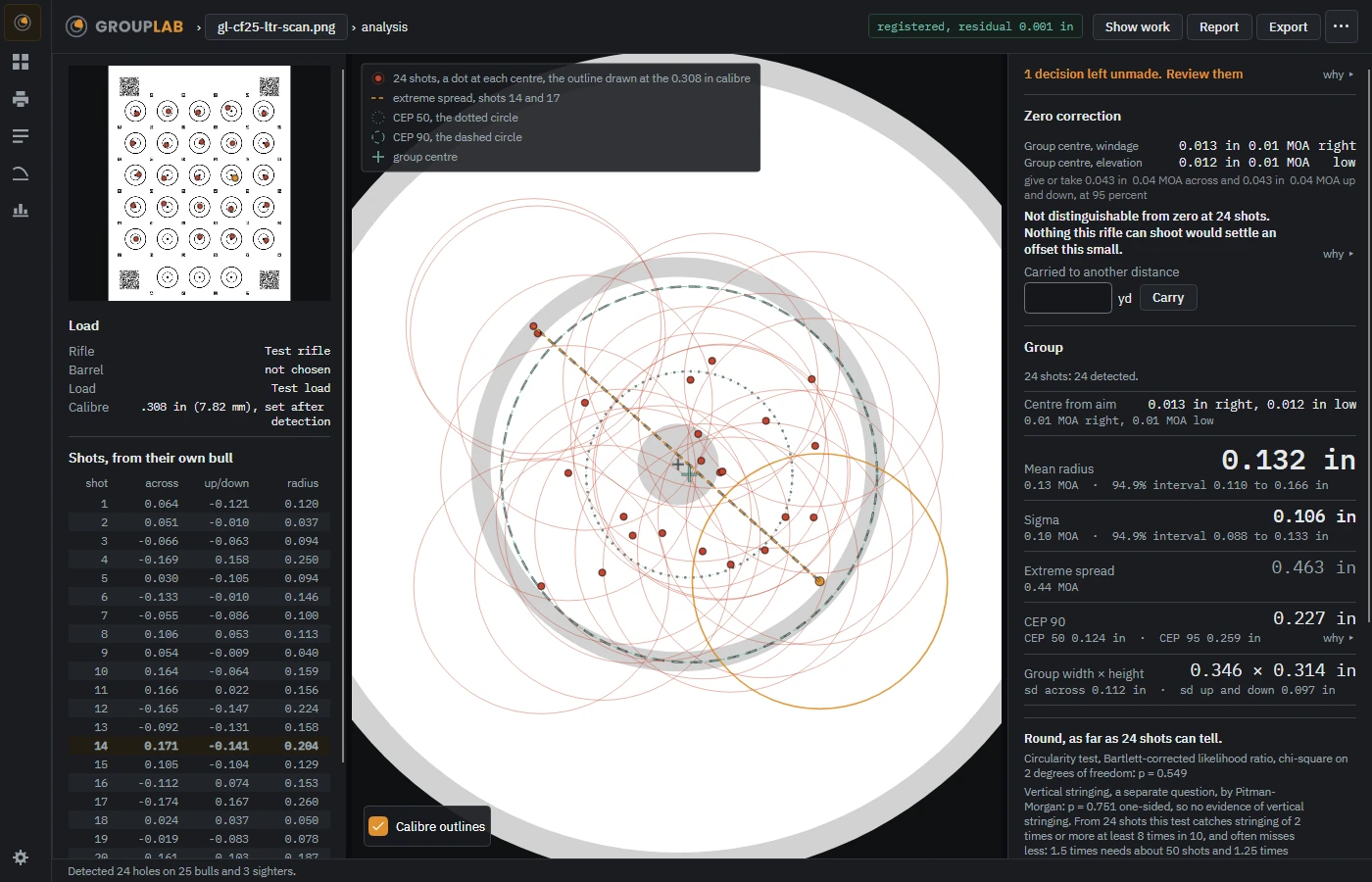
Mean radius, sigma, CEP, extreme spread and the zero correction, each with its interval and the reasoning one click away.
A store-bought target or blank paper can be marked by hand: set a known length, tap each impact, and the same statistics run.
The application
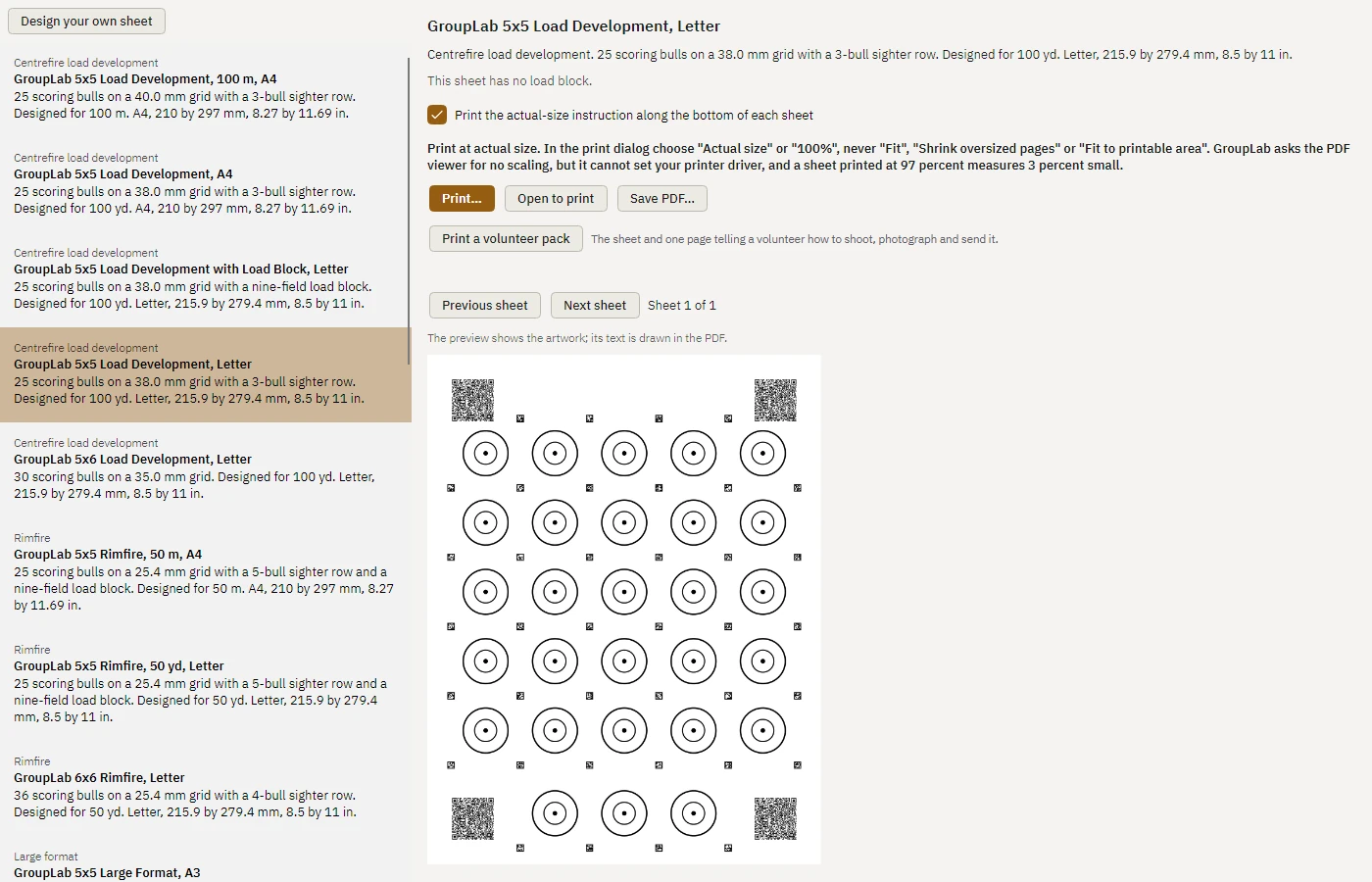
It shows its work.
What it is today
A Windows test build. Printing, marking, detection, the statistics, session records and reports all work. Much of it is built but not yet proven against a large body of real targets, which is why the project asks for them.
Not built yet
Hole detection on plain paper · Garmin Xero import · Android and iOS
The full status, phase by phase, on GitHubHelp prove it
Shoot a target for GroupLab.
GroupLab needs real targets, shot by real people with real rifles, to prove it measures correctly. Print a sheet, shoot it, photograph it before you take it down, and send the photographs. About ten minutes on top of the shooting.